
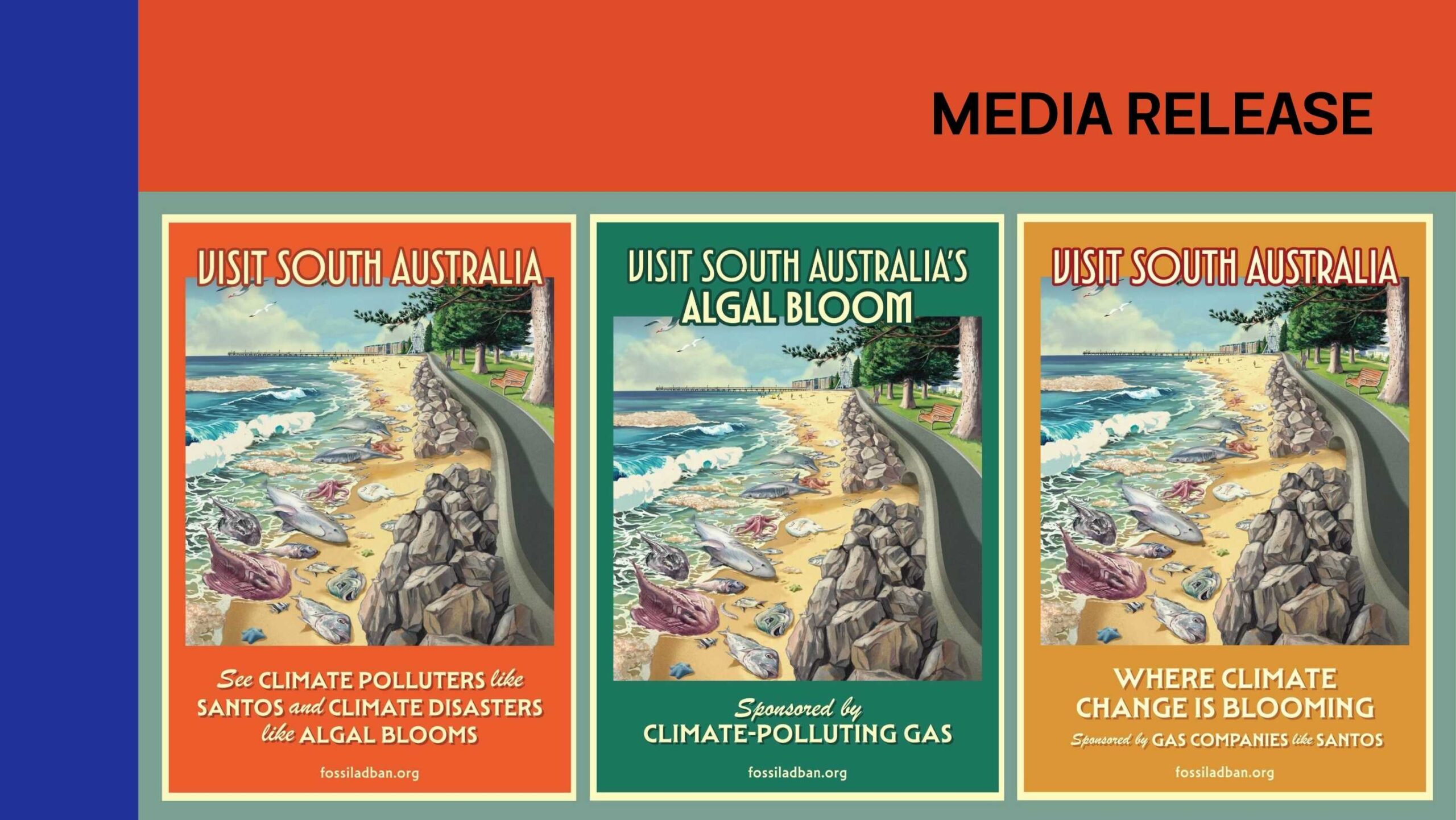
‘Climate Change is Blooming’ campaign satirises old-world tourism posters to expose new world climate disaster.
Art Deco tourism posters have been given a sinister twist in a campaign by climate communications charity, Comms Declare.
The campaign, created by Silver Lining Agency, aims to show the unprecedented ecological, health and economic disaster can be largely blamed on climate change, still being flamed by the burning of coal, oil and gas.
Comms Declare founder, Belinda Noble said, “If one good thing can come out of this heart-breaking year-long algal bloom, it will be that the government and public institutions stop marketing fossil fuels, while we phase out their use.”
‘It’s beyond belief that big polluters, such as Santos, can still sponsor major state events and widely advertise while millions of sea creatures die off the coast,” she added.
Santos is South Australia’s largest company and, according to the Clean Energy Regulator, is the 26th largest greenhouse gas polluter in Australia. It sponsors numerous cultural and sporting institutions, including Adelaide’s marquee Tour Down Under cycling race and Port Adelaide FC.
Jonny Clow, founder of Silver Lining said, “We chose to use a beautiful hand-painted illustration evoking travel posters of yesteryear to demonstrate what we are losing as climate change accelerates. After all, this is as bad for tourism and the economy as it is for sea life and locals alike.”
The posters, reverse graffiti and digital ads call on people to visit fossiladban.org and sign the petition against fossil fuel marketing.

About the Algal Bloom
The algal bloom is an unprecedented environmental, health and economic emergency.
South Australia’s economy has taken a $250 million hit, including aquaculture, fishing and tourism sectors.
Surfers and swimmers have reported having blurred vision, wheezing and sore throats, while coastal communities are experiencing severe mental health difficulties.
Ecological Scale
The phenomenon has reached a catastrophic scale, blanketing approximately 20,000 square kilometres, double the size of greater Sydney. The primary catalyst is Karenia mikimotoi, a highly toxic dinoflagellate responsible for the mass deaths of more than 780 marine species. Kelp, seagrass and shellfish reefs have also been widely lost.
Climate Change Nexus
The primary climatic driver is an intense Marine Heatwave, with sea surface temperatures 2.5°C above seasonal norms since September 2024. These thermal anomalies, combined with sustained calm weather and low winds, created a stratified water column that trapped nutrients at the surface, enabling exponential algal proliferation.
Other climate-linked contributors are run off from Murray River flooding in 2022/23, followed by a cold upswelling that brought nutrient rich water to the surface.
The climate-linked drought and warmer ocean means the bloom is remaining longer than expected and still moving. More frequent blooms are forecast in the future, mainly because of burning coal, oil and gas.
Credits:
Creative: Silver Lining
Illustration: Stuart McLachlan
Sources:
https://cer.gov.au/markets/reports-and-data/nger-reporting-data-and-registers/corporate-emissions-and-energy-data-2024-25
https://www.news.com.au/technology/environment/report-reveals-staggering-cost-of-algal-bloom-crisis/news-story/51856919d75e28fb1997672add5e81e0
https://www.theguardian.com/environment/ng-interactive/2026/mar/14/algal-bloom-south-australia-update-one-year-on